
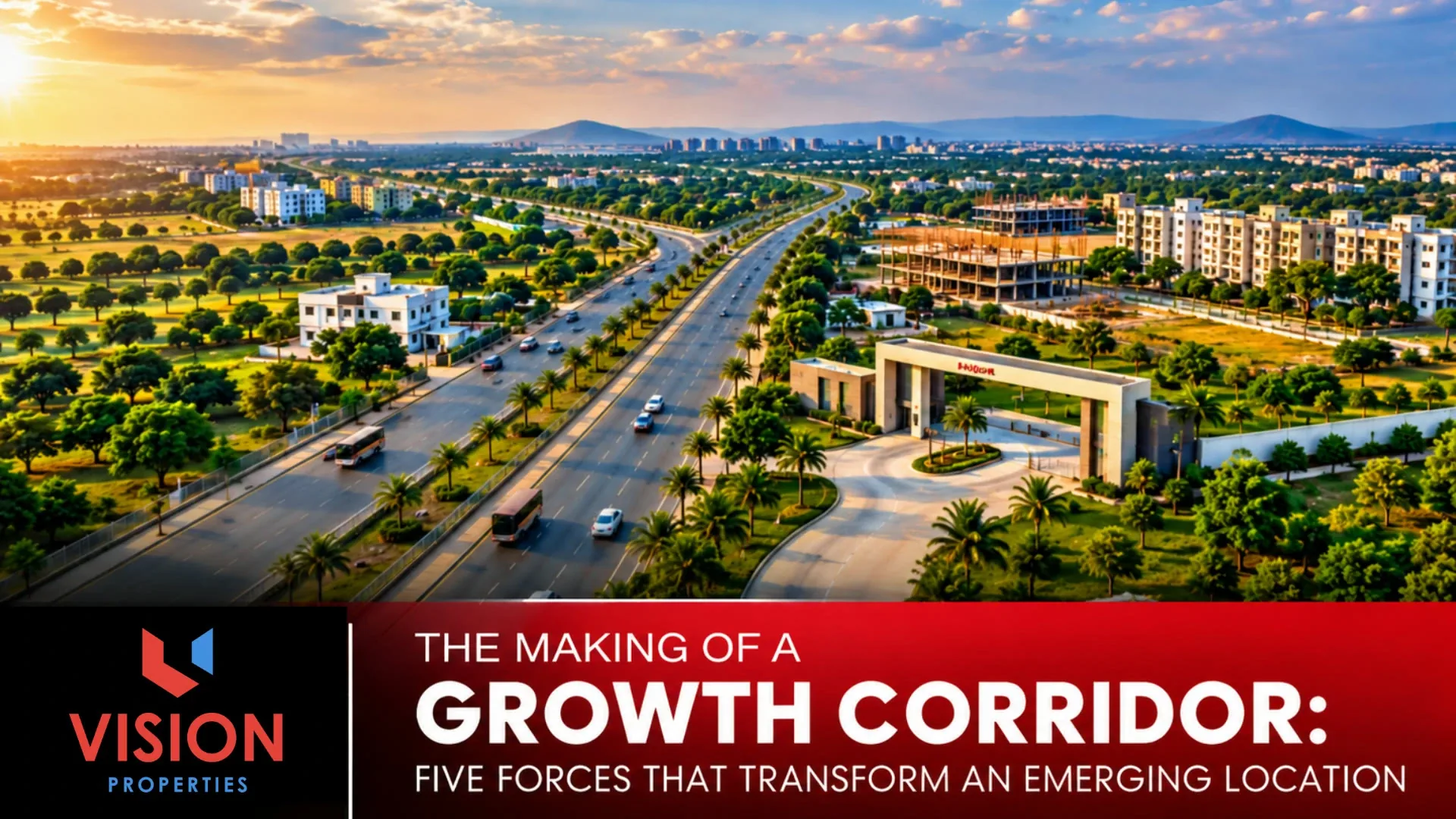
Have you ever travelled through a place that looked completely different a few years later?
A road that was once quiet may become busy. New businesses may come up. Schools, hospitals, warehouses and residential communities may start appearing. What seemed like an ordinary location can slowly become an important part of a city’s growth story.
That is how a growth corridor takes shape.
For someone looking to buy a plot, understanding this journey is important. Real estate growth is not only about what is available in a location today. It is also about the infrastructure, connectivity and development taking place around it.
Here are five factors that can transform an emerging location.
1. Infrastructure Changes the Way We Look at a Location
Good infrastructure can completely change how people experience a place.
Road widening, new highways, bridges, public transport and improved internal roads can make previously less-accessible locations easier to reach.
Once connectivity improves, people start looking at these locations differently. Businesses find it easier to operate, people find it easier to travel and property development naturally starts gaining attention.
2. Connectivity Brings Locations Closer
Distance is not always about kilometres.
A location that is 20 kilometres away but connected by a good highway can sometimes be more convenient than a location that is closer but difficult to access.
This is why connectivity to major roads, employment centres, educational institutions, commercial areas, airports and other important destinations matters when evaluating a property location.
For a property buyer, it is worth asking not just, “How far is it?”, but also “How easily can I reach it?”
3. Employment Creates Residential Demand
Where there are opportunities, people follow.
The development of industrial areas, IT parks, manufacturing facilities, commercial centres and logistics hubs can create employment opportunities.
And when more people work in an area, the need for homes, shops, schools, restaurants and other everyday services also grows.
This is one reason employment and residential development often grow together.
4. Logistics Can Become a Growth Driver
Today, logistics is playing an increasingly important role in regional development.
Warehouses, distribution centres, industrial corridors and logistics parks need good road connectivity. When such infrastructure develops, it can bring businesses and employment closer to surrounding areas.
The impact may not be immediately visible in residential real estate, but over time, it can contribute to the development of the wider region.
5. Planned Development Creates a Better Environment
Growth is not only about more buildings and more roads.
How an area is planned also matters.
Proper road networks, drainage, electricity, open spaces, amenities and necessary approvals can contribute to creating an organised development.
For customers, these details matter because buying a plot is not just about owning a piece of land. It is about understanding where that land fits into the larger development around it.
Looking Beyond What We See Today
A growing location does not transform overnight.
It happens step by step.
A new road leads to better connectivity. Better connectivity attracts businesses. Businesses create employment. Employment brings people. And gradually, residential development follows.
Vision Properties: Looking Beyond the Present
A growth corridor is created over time.
Infrastructure brings connectivity. Connectivity encourages businesses. Businesses create employment. Employment encourages communities. And communities create residential demand.
This larger picture is what we consider when developing our projects.
At Vision Properties, we don’t simply look for where development is happening. We look at why it is happening and what it can mean for the people who choose to invest there.
Because real estate is not just about today’s location. It is about understanding tomorrow’s possibilities.